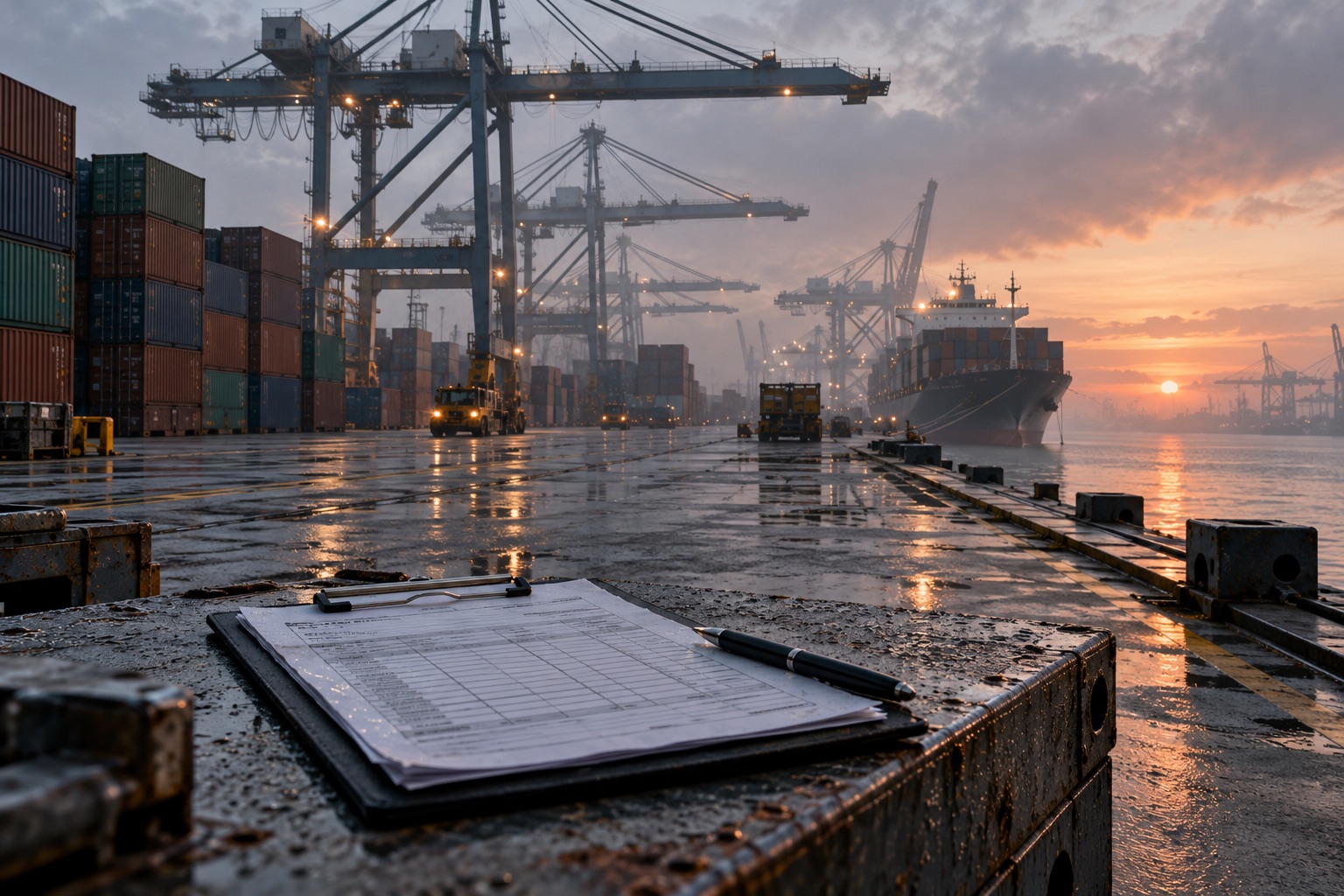
At the port, the physical objects are ready. The containers have identifiers. The ships have schedules. The cranes are capable of placing one on the other with millimetric confidence. What remains uncertain is whether the jurisdiction agrees that the object may continue.
This is the central comedy of modern logistics: matter has been standardized more thoroughly than permission. A steel box can move between vehicles without being opened. Its documentation, meanwhile, is frequently re-entered, inspected, stamped, reconciled and transmitted between systems whose shared protocol is often a human being reading two screens.
Digitization has not removed the border. It has made the border observable. Port community systems and electronic trade documents can shorten a delay, but only where participants accept the same records and the law recognizes them. The bottleneck is therefore less a missing database than a missing agreement about whose database counts.
The useful question is not whether trade will become paperless. It is which institutions will accept verifiable state changes without requesting a ceremonial duplicate. Until then, the containers will wait with the superior patience of objects.
Public source ledger